
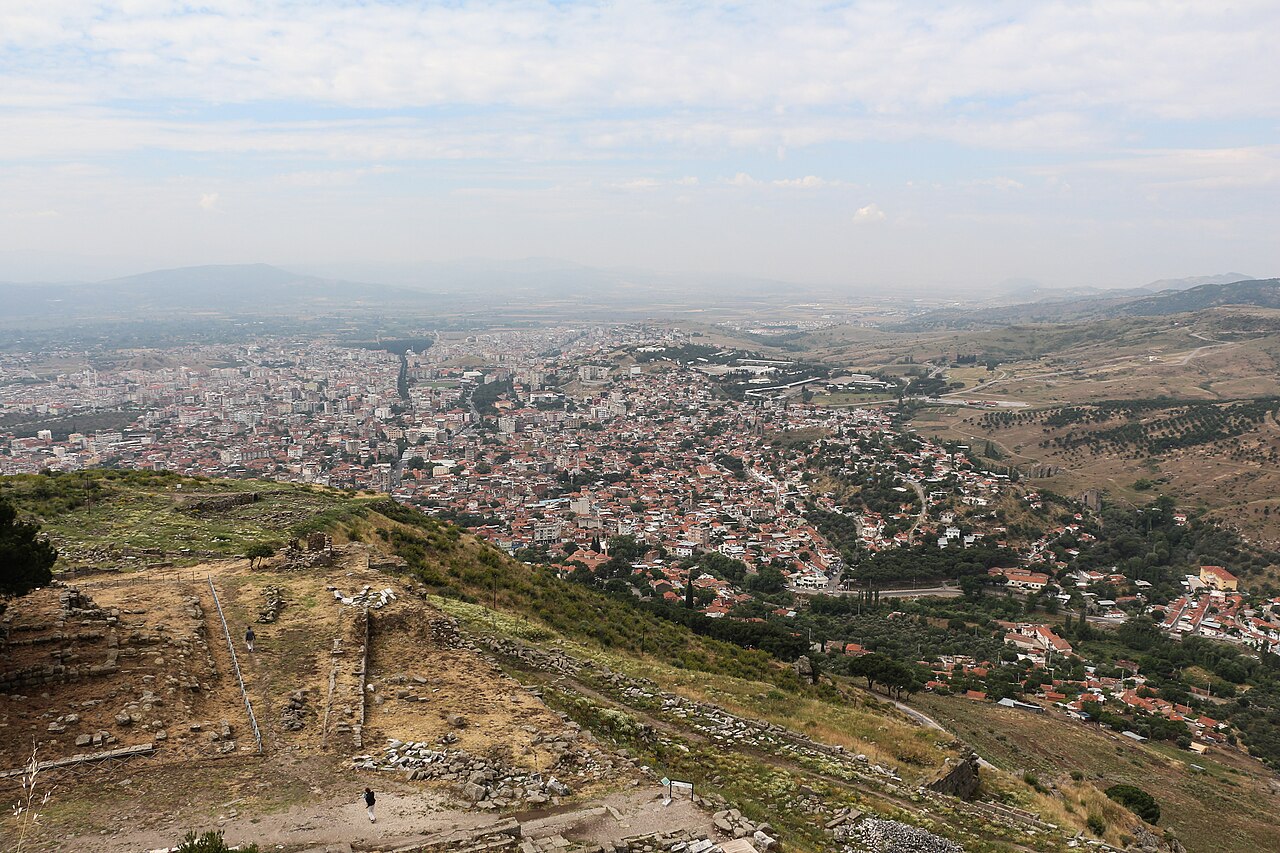
Bergama Tulum Cheese is a semi-hard, porous cheese made from the milk of cattle, sheep and goats grazed on the Kozak Plateau above Bergama, then aged for months in brine inside sealed tins. Turkey's Patent and Trademark Office registered it as a protected designation of origin on June 6, 2024, under registration number 1597 — meaning only cheese made and aged within the Bergama district can legally carry the name. For travelers combining archaeology with Aegean food, it's a worthwhile stop beyond the ancient city.
How Is Bergama Tulum Cheese Made?
Production starts with raw milk heated to 58-60°C (136-140°F) for 15 minutes, then cooled and set with rennet. Producers use either 100% cattle milk or a blend of roughly 40-50% cattle, 30-40% sheep and 20-30% goat milk. The curd is cut to chickpea size, pressed into blocks, dry-salted, and packed into tins for a pre-ripening stage called "göz açma" (eye-opening), lasting three to five days until pea-sized holes form in the cheese. Brine is then added, the tin is sealed, and the cheese matures for at least four months at 4-7°C (39-45°F).
What Sets It Apart from Other Tulum Cheeses?
What distinguishes Bergama Tulum Cheese is the Kozak Plateau itself, the grazing ground that gives the milk its character. The registered boundary sits 500-1,000 meters (1,600-3,300 feet) above sea level, covered in Aleppo pine forest, and its flora includes 244 plant species across 147 genera — two of them, izmirdeliçayı and egekılaçı, found nowhere else on earth. Animals feeding on this vegetation pass terpene compounds into the milk that give the aged cheese its fruity, savory notes.
How Do You Tell It's the Real Thing?
Since its 2024 registration, genuine Bergama Tulum Cheese has carried the words "Bergama Tulum Peyniri" and the official geographical-indication emblem on its packaging; if the packaging can't display it, the seller is required to post it visibly at the point of sale. The texture is semi-hard and porous, with visible "eye" holes from the ripening stage. Once bought, keep it cool and, if possible, in its own brine — the salt content runs 3.8-6.0% of dry matter, a noticeably assertive cheese rather than a mild breakfast one.
Who Should Try It?
This is a stop for food-curious travelers, couples building a wine-and-cheese afternoon into their itinerary, or groups on an Aegean gastronomy tour. Its strong aroma and salt level make it a less obvious choice for young children or anyone used to mild cheese — if you're traveling with kids, start with a small taste rather than a full board.
Fitting It Into a Route
The cheese stop pairs naturally with a morning at Bergama's Acropolis and Asklepion, leaving the afternoon free for the producers. Travelers curious about the plateau itself can read our guide to Kozak Plateau's pine-nut villages, since the pine forests and the cheese's grazing land share the same ground. For transfer options from the airport, see our Bergama route page.
Frequently Asked Questions
When was Bergama Tulum Cheese officially registered?
Turkey's Patent and Trademark Office registered it on June 6, 2024, under number 1597, based on an application the Bergama Chamber of Commerce filed on January 15, 2020.
Is it always made from cow's milk?
No — producers can use 100% cattle milk, or a blend of roughly 40-50% cattle, 30-40% sheep and 20-30% goat milk.
How long does it age?
After brining and sealing, the cheese matures for at least four months at 4-7°C (39-45°F) before it's ready to sell.
How do I spot a genuine one?
Look for the words "Bergama Tulum Peyniri" and the geographical-indication emblem on the packaging required since the 2024 registration; without both, it isn't the registered product.
Can it legally be produced outside Bergama?
No. The registration restricts the entire production process to the Bergama district of Izmir province.