
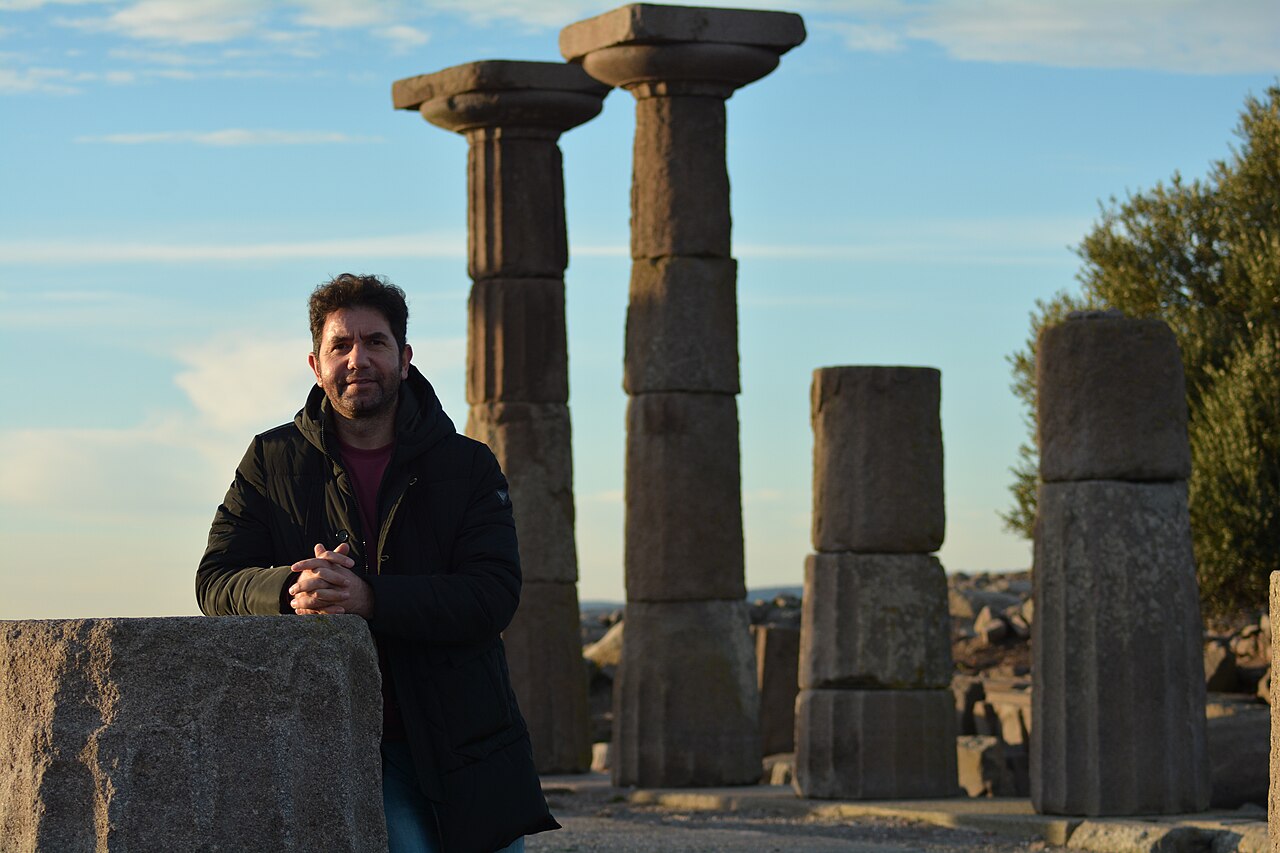
Push on another hour north past Edremit and you reach the ruins of the only Doric-order temple ever built in Anatolia, and the seaside village where Aristotle once ran a school of philosophy: Assos, at the far western tip of the Edremit Gulf.
The Seaside Village Where Aristotle Taught
After leaving Plato's Academy in Athens, Aristotle came to Assos between 347 and 344 BCE at the invitation of the local ruler, King Hermias. He founded a philosophy school here and carried out research in logic, biology, and zoology, turning the small city into a short-lived center of learning.
The Temple of Athena: Anatolia's Only Doric Example
Built around 530 BCE on the highest point of the acropolis, the Temple of Athena is the only Doric-order temple ever constructed in Anatolia. Part of its colonnade still stands, with wide views over the stone village below and across the water toward the Greek island of Lesbos on the horizon.
Behramkale Village and Its Ottoman Layer
The village of Behramkale, at the temple's foot, carries its own Ottoman-era history. Its Hüdavendigar Mosque was built in the 14th century under Sultan Murad I, using stone blocks taken from the ancient city — some still bearing cross carvings that were deliberately left untouched, a rare case of two eras built literally on top of each other.
Getting from Edremit to Assos
After a private transfer from İzmir Airport to Edremit, continuing to Assos along the same gulf road adds roughly an hour's drive along the coast.
Who Assos Suits
History-minded travelers, photographers, and anyone who wants to watch the sunset from a height will get the most from Assos. It doesn't suit visitors using a wheelchair or anyone with limited mobility, since the path up to the acropolis is steep and uneven stone. Nor is it a quick 20-minute stop — both the temple and the village reward slower visits.
Practical Tips for Visiting
Wear flat, non-slip shoes for the climb — the stones are old and irregular. Shade is scarce, so bring water. Small shops and cafés in the village mostly prefer cash. The area around the temple gets crowded at sunset, so mornings make for a calmer visit.
Add It to a Route: Olives and Mount Ida
Assos works better as part of a longer gulf itinerary than as a stand-alone day. Pair it with a visit to Edremit's registered olive groves the day before or after, or add the hike to the Zeus Altar from Altınoluk for travelers who want to head into the mountains. One transfer route, three very different sides of the same gulf.
Frequently Asked Questions
How long does it take to get from Edremit to Assos?
After a transfer down to Edremit, continuing north adds roughly an hour's drive along the same gulf road to reach Assos.
Is climbing up to the Assos acropolis difficult?
Yes, the path up to the acropolis is steep and uneven stone, so flat, non-slip shoes are essential and the old stones require careful footing.
Who is Assos not suitable for?
It doesn't suit visitors using a wheelchair or anyone with limited mobility, since the paths up to the acropolis are steep and uneven.
What's the best time to visit Assos?
The area around the temple gets crowded at sunset, so mornings make for a calmer visit.
Do shops in the village accept cards or only cash?
Small shops and cafés in Behramkale village mostly prefer cash.
Should Assos be visited on its own?
No, it works better combined with other stops along the gulf — pairing it with Edremit's olive groves or the hike to the Zeus Altar from Altınoluk makes for a fuller route.