
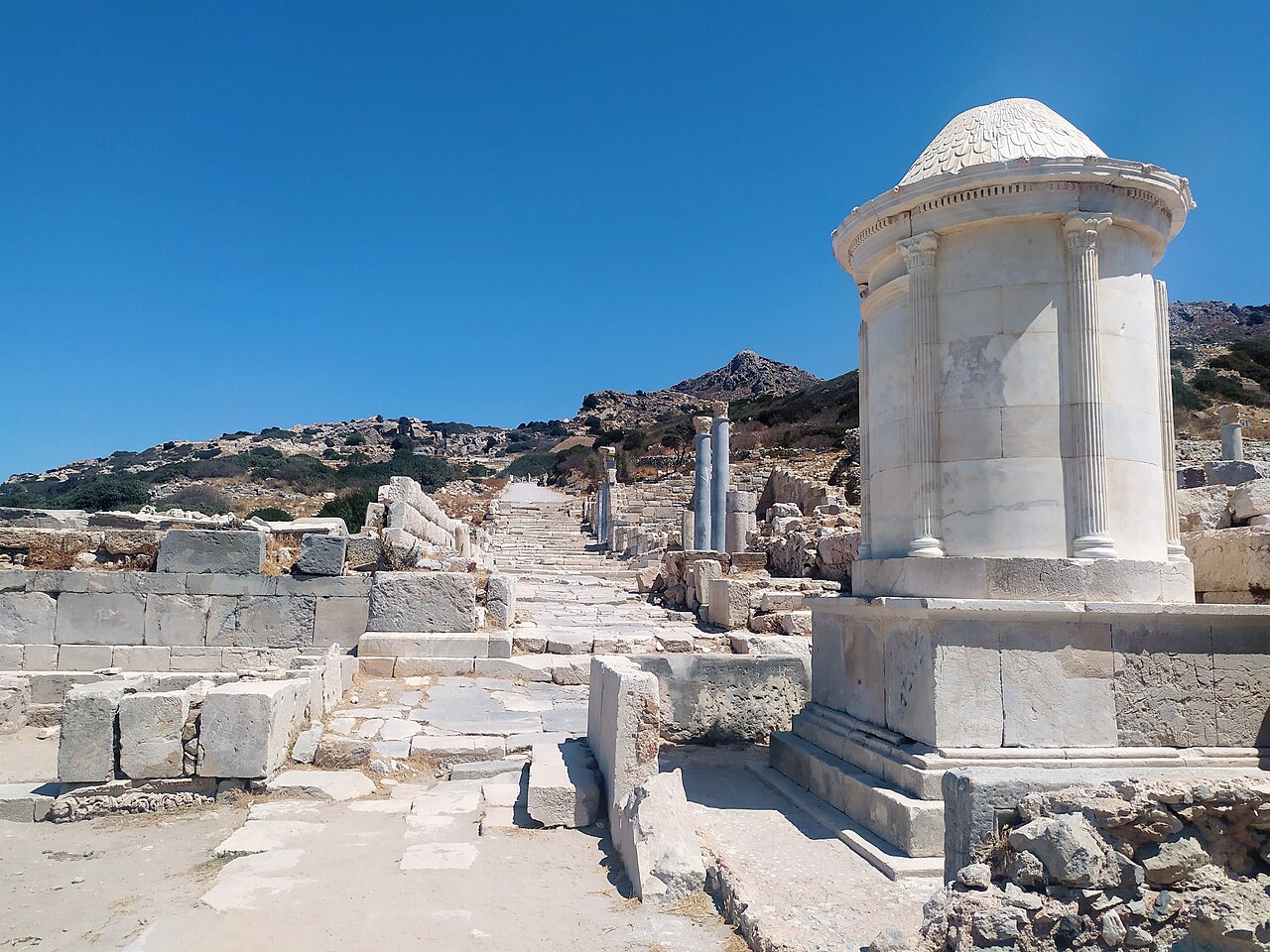
Knidos sits at the very tip of the Datça Peninsula, right where the Aegean and the Mediterranean meet. The question most visitors ask first is simple: why would such a large city rise at the end of such a remote peninsula? The answer is trade. Knidos controlled two natural harbours at once, able to shelter ships arriving from the north and the south along the same stretch of coastline, which turned it into a meeting point for science, art and commerce in the ancient world.
A City Between Two Harbours
The layout still tells the story of that double harbour: the smaller northern harbour served military purposes, while the southern one handled trade. Walking past the theatre, the agora and the stoa, you can see both seas at once — the detail that sets Knidos apart from other Aegean ruins. Another trace worth looking for on site is the remains of a sundial that once marked the seasons and the hours; Knidos's reputation for science wasn't just about famous names, it was carved into stone.
The Temple of Aphrodite and Praxiteles' Lost Statue
The city's best-known structure is the circular Temple of Aphrodite, about 17 metres across. It once displayed a nude statue of Aphrodite by the sculptor Praxiteles, a work so celebrated that people reportedly travelled from other cities just to see it. The statue itself is gone — standing at the temple site and picturing what once stood there is one of the more striking moments of the visit.
Sostratos: The Architect Behind Alexandria's Lighthouse
Knidos's link to science wasn't incidental. The astronomer and mathematician Eudoxus lived here, and so did Sostratos, the architect who designed the Lighthouse of Alexandria — one of the Seven Wonders of the Ancient World. That a small peninsula town produced the architect of one of history's most famous buildings says a lot about how seriously Knidos took science and engineering.
Getting There: Airport to Datça, Datça to Knidos
A private transfer from İzmir Adnan Menderes Airport is the most comfortable way to reach Datça — one vehicle, no transfers, no dragging luggage between buses. Drivers covering the airport-to-Muğla route can continue on to Datça on request; Knidos itself lies at the very tip of the peninsula, beyond Datça town, on a narrow, winding but scenic road.
When to Go and How Much Time to Set Aside
Give yourself at least two hours — the theatre, agora and temple area are spread across open, sloped ground, not a quick walk-through. There's almost no shade at midday, so early morning or close to sunset works best. Bring water, a hat and comfortable shoes; shaded spots and vendors are limited on site, and carrying some cash helps at the small cafés nearby.
Who It Suits — and Who It Doesn't
History enthusiasts, photographers and couples looking for a quiet sea view will find Knidos rewarding. The uneven, sloped terrain makes it difficult for wheelchairs or strollers, and families with small children should factor in the walking distance. If you're after a lively, crowded atmosphere, Knidos's silence won't deliver it — this is a slow, patient kind of visit.
Rounding Out a Day in Datça
Knidos works best as the last stop of a Datça day: spend the morning around Datça's bays and marina and move on to Knidos in the afternoon. If one day isn't enough, the route can be extended toward Marmaris's Selimiye and Bozburun bays. For anything time-sensitive before you go, the official museum and site channels are the safest place to check.
Frequently Asked Questions
How much time should I set aside to visit Knidos?
Give yourself at least two hours to visit Knidos. The theatre, agora and temple area are spread across open, sloped ground, so it's not a place to rush through.
What time of day is best to visit Knidos?
Early morning or close to sunset is best for visiting Knidos. There's almost no shade at midday.
Can you still see the Aphrodite statue at Knidos?
No, the famous nude Aphrodite statue by Praxiteles is no longer at Knidos. At the temple site you can only see where the statue once stood.
Is Knidos accessible with a wheelchair or stroller?
The uneven, sloped terrain makes Knidos difficult to visit with a wheelchair or stroller. Families with small children should also factor in the walking distance.
How do you get from İzmir Airport to Knidos?
A private transfer from İzmir Adnan Menderes Airport first takes you to Datça; drivers can continue on to Datça on request. From Datça town, Knidos is reached via a narrow, winding but scenic road.
What should you bring when visiting Knidos?
Bring water, a hat and comfortable shoes. Shaded spots and vendors are limited on site, so carrying some cash helps too.