
Allow at least half a day for Pamukkale: the travertines, the ancient city of Hierapolis and Cleopatra's Pool are on the same site and together take 3–4 hours. About 20 km from Denizli city centre, Pamukkale was added to the UNESCO World Heritage List together with Hierapolis in 1988, and it is about a 3-hour drive from Izmir Airport.
How Were the Pamukkale Travertines Formed?
Pamukkale's white terraces form when thermal water saturated with calcium carbonate reaches the surface, releases its carbon dioxide and deposits calcium carbonate. The mineral first settles like a gel and gradually hardens into the stepped terraces we see today.
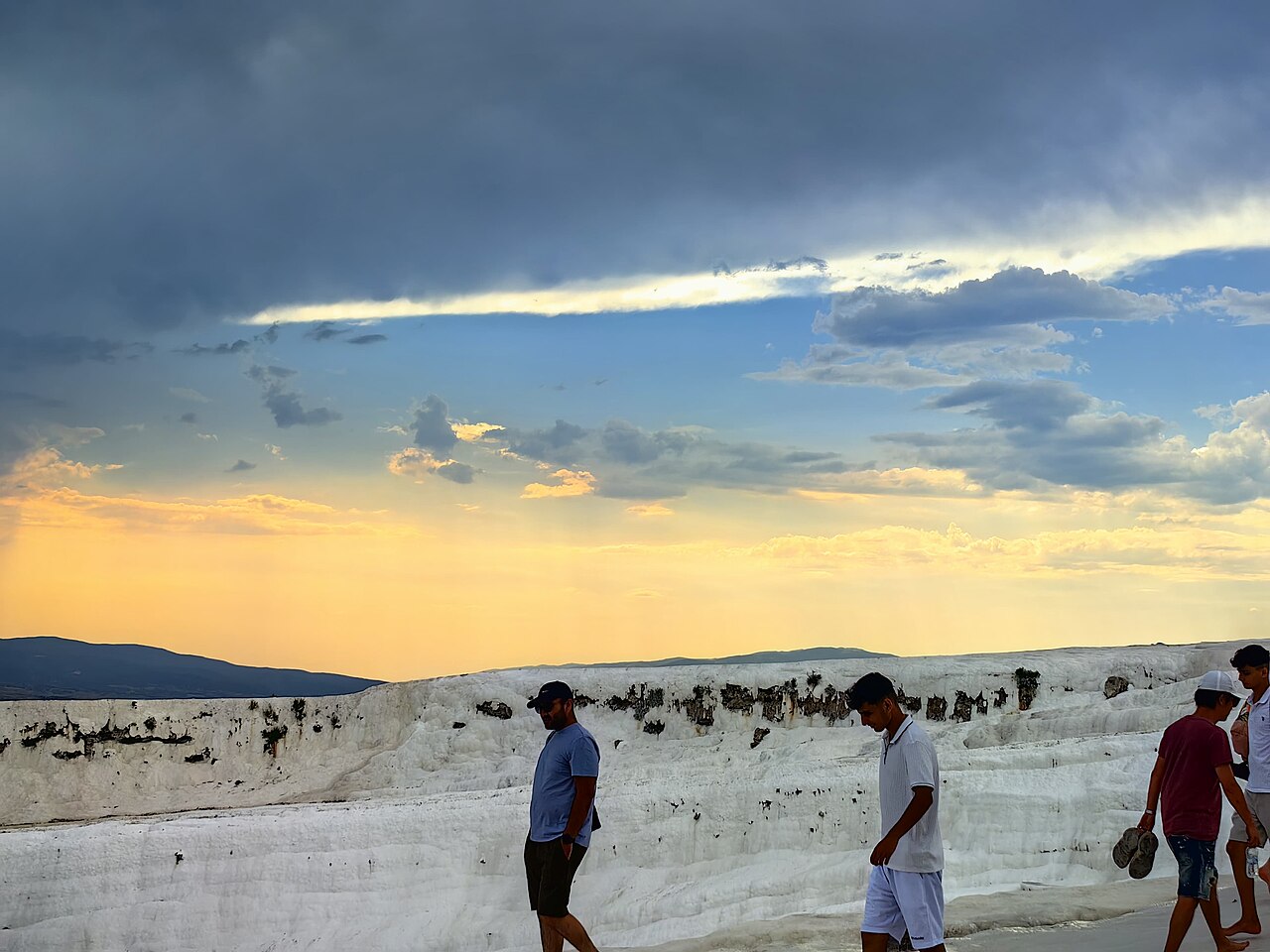
There are 17 hot springs in the area with temperatures between 35 °C and 100 °C. To protect the travertines, visitors may walk the terraces only along a set path and barefoot; follow the attendants' directions.
What Is at Hierapolis and Cleopatra's Pool?
Hierapolis was founded at the beginning of the 2nd century BC, under Seleucid rule, as a thermal spa centre. In the ancient city just above the travertines, the theatre, the necropolis and the main street stand out.
Cleopatra's Pool is a thermal pool with ancient marble columns lying under the water; you can swim in it for a separate fee. The pool can get crowded, so early morning is the quietest time.
In What Order Should You Visit Pamukkale?
There are two ways to visit Pamukkale: enter from Pamukkale village and climb up the travertines, or enter at the top, see Hierapolis first and then walk down the travertines. For visitors with a driver the second is less tiring; the car drops you at the top and meets you at the bottom.
The suggested order is:
- Hierapolis: the theatre, the main street and the necropolis (1.5–2 hours).
- Cleopatra's Pool: a short break or a swim (30 minutes–1 hour).
- The travertines: a barefoot walk down and the sunset (1 hour).
What Is Karahayıt's Red Water?
Karahayıt is a thermal neighbourhood a few kilometres north of Pamukkale. Its red spring forms red travertines because of the iron ions it contains, and there are red, green and yellow thermal springs in the area.
From the 1990s onwards large hotels with thermal pools were built in Karahayıt. For those who want to see Pamukkale with an overnight stay, the thermal hotels in Karahayıt are a practical base: spend the evening in a thermal pool and the morning on the travertines.
When Is the Best Time to Visit Pamukkale?
The best time to visit Pamukkale is spring and autumn. In summer the white travertines reflect the sun, so midday is very hot and glaring; in winter the thermal water and steam make the view even more striking. When planning, keep in mind:
- Choose the hours near sunrise or before sunset.
- Bring sunglasses and sunscreen; the travertines reflect a lot of light.
- Bring a small bag to carry your shoes, and a swimsuit and towel for the pool.
How Do You Get from the Airport to Pamukkale?
The road from Izmir Adnan Menderes Airport to Pamukkale is about 250 km and takes about 3 hours on average. A day trip is possible, but with 6 hours of driving there and back, staying a night in Karahayıt is more comfortable.
You can get a quote for a car and driver on our Izmir Airport to Denizli (Pamukkale) transfer page.
Who Is Pamukkale Suitable For?
Pamukkale suits photographers, history lovers, those after a thermal holiday and families with children. Walking on the travertines can be slippery, so those who find walking difficult should take in the view from the upper part, on the Hierapolis side. For a thermal option close to Izmir, see our Balçova thermal springs guide, and for other spas in the region, our thermal springs of the Aegean guide.
Frequently Asked Questions
How many hours do you need for Pamukkale?
Allow 3–4 hours for the travertines, Hierapolis and Cleopatra's Pool; half a day if you plan to swim in the pool.
When did Pamukkale join the UNESCO list?
Pamukkale was added to the UNESCO World Heritage List together with Hierapolis in 1988.
Can you walk on the travertines in shoes?
No. To protect the travertines you walk barefoot along the set path; carry your shoes with you.
Can you visit Pamukkale as a day trip from Izmir?
Yes; the road from the airport takes about 3 hours. But with 6 hours of driving there and back, staying a night is more comfortable.
Is Karahayıt close to Pamukkale?
Yes. Karahayıt is a few kilometres north of Pamukkale and, with its thermal hotels, a practical place to stay.